







To the edge of the world and back: a solo travel adventure across Norway
Maya Toebat
17 June 2026
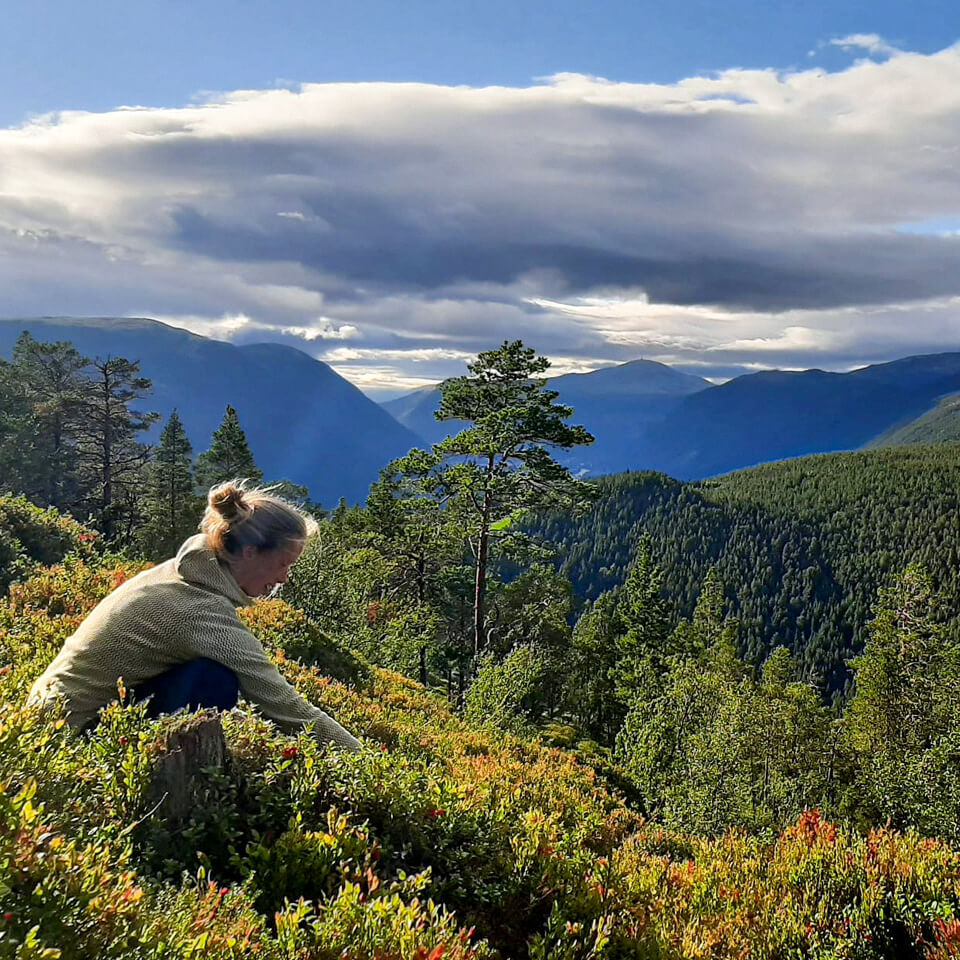
Maya pauses for a moment at a scenic overlook near Otta, Norway
Last summer, I headed 3,000 kilometres north from my home in Brussels all the way to Svalbard, Norway, taking a combination of trains and a sailboat to reach the remote archipelago near the North Pole.
I sailed across the Barents Sea, anchored in remote bays and searched for whales and glaciers. Every day brought something new; it was a magical adventure at the edge of the world.
One month later, I found myself back on mainland Norway.
This time, I was heading back south, still very far from home. I planned to use this long journey to explore a cross-section of Norway by train — from Bodø to Oslo and beyond. Accustomed to wild camping in the northern islands of Norway, I wanted to combine train travel with hiking and camping; along the way, I hiked part of the famous Seven Sisters mountain range near Mosjøen, slept in a free cabin near Trofors Station, camped in Trondheim’s park and spent two days wandering Nevelfjell after a bus ride from Lillehammer. Even near Oslo, I camped on an island reachable by public ferry.
On my journey home, I saw Norway from within and learned that train travel combines well with hiking and camping. I experienced the fjords, forests and mountains in a way that is impossible when you travel quickly, instead taking time to fully immerse myself in the landscape. The pleasure of moving slowly, by train and by foot, still lingers, long after my summer in the far north came to an end.
-
Interrail Global Pass
-
10 days within 2 months


- Bodø, Norway 🇳🇴
- Mosjøen, Norway 🇳🇴
- Trofors, Norway 🇳🇴
- Trondheim, Norway 🇳🇴
- Otta, Norway 🇳🇴
- Lillehammer, Norway 🇳🇴
- Oslo, Norway 🇳🇴
- Ängelholm, Sweden 🇸🇪
- Copenhagen, Denmark 🇩🇰
- Brussels, Belgium 🇧🇪
Trip details

A cabin sits along the Saltstraumen outside Bodø
Bodø, Norway
What makes it special
Bodø is a lively coastal town that acts as the gateway to the Lofoten Islands. Even though I didn’t stay long, I realized why travellers feel drawn there.
With fjord views stretching in every direction and a bustling harbour full of small boats and ferries, the town blends the charm of a seaside community with easy access to Norway’s wild north. Locals recommended short hikes to nearby viewpoints, and I could almost feel the pull of the surrounding islands calling me for a longer stay.
What to do:
- Stroll along the harbour and city centre, enjoying the maritime atmosphere and watching ferries come and go.
- Take an island‑hopping boat trip and explore nearby islands with sandy beaches, seabird colonies and hiking paths. They're perfect for picnics, swims or just soaking up the Arctic coast.
- Combine town life with nature by biking or hiking out to beaches, exploring Saltstraumen (one of the world’s strongest tidal currents) or taking a short hike to Kaiservarden (384 metres) for sweeping views of the city, sea and islands beyond.
Suggested route
-
From: Bodø
-
To: Mosjøen
-
Average travel time: 3 hours, 54 minutes
-
Transfers: 0
-
Seat reservations: Required


Fog adds to the mystical atmosphere in the meadows nearby Mosjøen.
Mosjøen, Norway
What makes it special
Mosjøen is a small town in the province of Helgeland known for its well-preserved wooden houses lining the historic street Sjøgata. From the city, you can also reach the Seven Sisters mountains, a chain of seven dramatic peaks that rise straight from the coast and dominate the skyline. According to local folklore, the mountains were once seven sisters who were turned to stone at sunrise as they fled from a mythical horseman chasing them along the coast.
What to do:
- Wander down Sjøgata to admire the beautifully preserved wooden buildings and pop into cozy cafés, like Cafe Sjøsiden or Kulturverkstedet.
- Take a day trip to the Seven Sisters, where the trails wind up toward multiple peaks. The easier ascents (like Skjæringen and the Twins) are rewarding hikes of several hours, while tackling all seven in one go is a serious endurance challenge for experienced hikers (it can take 10-15+ hours and demands strong fitness and good preparation).
Suggested route
-
From: Mosjøen
-
To: Trofors
-
Average travel time: 38 minutes
-
Transfers: 0
-
Seat reservations: Not required

The DNT Stavassetra cabin, a few hours' hike away from Trofors
Trofors, Norway
What makes it special
Trofors is a tiny village tucked away among forests and rolling hills. Not much is happening in town itself, but that’s exactly what makes it appealing for hikers and nature lovers. From here, you can embark on a trek into the surrounding wilderness.
What to do:
- I hiked to DNT Stavassetra, a small cabin maintained by the Statskog Association, where you can spend the night for free. The walk takes roughly four to five hours, with gentle climbs and rewarding views along the way – but also very wet terrain! Bring some food to enjoy along the trail and for dinner. Even if you don’t stay overnight, the trail itself offers a good introduction to the Norwegian backcountry.
- Visit Grane Bygdetun, a museum showcasing the region’s logging heritage, calling back to a tine when vast amounts of timber were floated down the Vefsna River. The museum also features an exhibition on the local silver mine, which was once the second largest in Norway.
Suggested route
-
From: Trofors
-
To: Trondheim
-
Average travel time: 5 hours, 18 minutes
-
Transfers: 1
-
Seat reservations: Required

A view of Trondheim's colourful harbour
Trondheim, Norway
What makes it special
Trondheim is a historic city with a lively student population, striking a balance between urban energy and easy access to nature. From the famous Nidaros Cathedral to the scenic riverfront and nearby hills, the city offers cultural experiences, stunning viewpoints and outdoor escapes all in one stop. It’s easy to spend a day wandering its streets or a few days exploring both the city life and the surrounding nature.
What to do:
- Relax in the sauna at Sjøbadet, right on the waterfront, with views of the fjord.
- Visit the Trøndelag Center for Contemporary Art, PoMo Museum or Babel Art Space for exhibitions by local and international artists.
- Stop by ISAK Bakeri, Jacobsen & Svart Coffee Roasters or SELLANRAA Bok & Bar for good coffee, baked goods, and a cosy atmosphere.
- Wander through Bymarka Park and, if you’re up for it, wild camp overnight to experience Trondheim from a different perspective. I also recommend a hike to Theisendammen and further up to Baklidammen.
Suggested route
-
From: Trondheim
-
To: Otta
-
Average travel time: 4 hours, 5 minutes
-
Transfers: 0
-
Seat reservations: Not required

There are plenty of places to pause and take in the view along Otta's trails.
Otta, Norway
What makes it special
Otta is a small, welcoming town tucked along a river that shares its name, surrounded by looming mountains. It’s the gateway to Rondane National Park, Norway’s first national park, established in 1962.
The town feels calm and unassuming, but step outside and adventure is everywhere — whether you go for a walk in the park, wander along forested trails, or simply gaze at the mountains from the riverbank.
What to do:
- For those looking for a bit more thrill, the Otta or Sjoa River offer opportunities for rafting.
- Hike in the nearby mountains or along river trails in Rondane Park. In summer, hiking paths lead in every direction. There is a bus between Mysusæter, Spranget and Otta several times a day throughout the summer, offering a connection to the park. The bus corresponds with the train departures to Otta, so you can travel easily and seamlessly from the train onwards by bus.
Suggested route
-
From: Otta
-
To: Lillehammer
-
Average travel time: 1 hours, 44 minutes
-
Transfers: 0
-
Seat reservations: Not required

One of Maya's wild-camping spots nearby Lillehammer
Lillehammer, Norway
What makes it special
Famous for hosting the 1994 Winter Olympics, Lillehammer is much more than its Olympic history. Nestled between lakes and mountains, the town is ideal for hiking, outdoor activities and cultural exploration. It’s a perfect stop to stretch your legs, reconnect with nature and experience Norwegian traditions.
What to do:
- Take a bus to Sjusjøen, where I spent two days hiking through the surrounding mountains and wild-camping among lakes and open landscapes.
- Step back in time at Maihaugen, one of Norway’s largest open-air museums. Wander among the historic buildings, ranging from medieval farmhouses to modern homes, and experience everyday life through the centuries.
- Take the gondola to Mosetertoppen for panoramic views over Lillehammer and Lake Mjøsa.
- On rainy days — though Norwegians often insist “there is no bad weather, only bad clothing” — head indoors and visit the Lillehammer Art Museum.
Suggested route
-
From: Lillehammer
-
To: Oslo
-
Average travel time: 2 hours, 52 minutes
-
Transfers: 0
-
Seat reservations: Not required

A quiet street corner in Oslo
Oslo, Norway
What makes it special
After weeks in remote landscapes, Norway’s capital offered me an urban experience with cafés, museums and vibrant neighbourhoods. As one of the few major cities in the country, Oslo combines city life, culture and history with easy access to nature. Fjords, forests, and islands are just a short ferry or public transport ride away, making it easy to switch between urban exploration and outdoor adventure.
What to do:
- Take a ferry to the Oslo islands for picnics, camping, or quiet walks right next to the city. Free wild camping is allowed on the island Langøyene (for a maximum of two days). The island can be reached by ferry line B2 from City Hall Pier, which runs all summer.
- Wander through Vigeland Sculpture Park, an open-air gallery featuring hundreds of sculptures set in a green urban landscape.
- Stop at some of Oslo’s best cafés: Babbo Collective (Øvrefoss), Lille Oslo Kaffebrenneri, Litteraturhuset Café, Papegøye and Farine.
- Try a floating sauna in the harbour and take a refreshing dip in the Oslofjord afterwards.
- Visit Deichman Bjørvika (Oslo Public Library) for its modern architecture and fjord views. Next to it is Operahuset (Oslo Opera House), an architectural landmark known for its striking slanted roof that can be walked on. Whether or not you attend a performance, the building is worth visiting for its panoramic views of the Oslofjord and city skyline.
Suggested route
-
From: Oslo
-
To: Ängelholm
-
Average travel time: 5 hours, 31 minutes
-
Transfers: 1
-
Seat reservations: Not required

One of the peaceful walking paths near Ängelholm
Ängelholm, Sweden
What makes it special
Time to cross the border to Sweden! While a more logical stop between Oslo and Copenhagen might be Gothenburg, Sweden’s bustling west coast city near the Bohuslän archipelago, I opted for a quieter detour to Ängelholm. This small town is surrounded by forests and peaceful trails, ideal for a short stop or overnight wild camping.
What to do:
- I discovered a tiny forest shelter (Vindskydd Kronogläntan) on the map, perfect for wild camping, and I wasn’t the only one with this idea. A Swedish family was using the BBQ area, and two German cyclists already made the shelter their home for the night.
- I only stopped for one night, but you can easily spend a day here and hike through the Kronoskogen forest to the beach at Skälderviken.
Suggested route
-
From: Ängelholm
-
To: Copenhagen
-
Average travel time: 1 hour, 43 minutes
-
Transfers: 0
-
Seat reservations: Not required

One of Copenhagen's many peaceful waterfront areas
Copenhagen, Denmark
What makes it special
Copenhagen is Denmark’s vibrant capital, full of canals, historic architecture and a modern, bike-friendly atmosphere. After weeks of trains and hiking in Norway and Sweden, arriving in Copenhagen feels like a reward: a city to explore at leisure with easy access to cultural sites, cafés and places for a waterfront stroll.
What to do:
- Explore Nyhavn harbour and walk through the city centre.
- Rent a bike to discover neighbourhoods like Vesterbro or Christianshavn.
- Visit the National Museum or hop on another train to the Louisiana Art Museum, which sits beautifully near the sea.
- Take a ferry to Holmen, a former industrial area where there is now a food hall, a bar called La Banchina (where you can swim in the summer) and the Copenhagen Contemporary art museum.
Suggested route
-
From: Copenhagen
-
To: Brussels
-
Average travel time: 16 hours, 42 minutes
-
Transfers: 2
-
Seat reservations: Required

Maya took this photo from her train window in Germany, on her journey home to Brussels
Brussels, Belgium
What makes it special
For me, returning to Brussels is returning home, but for other for travellers, arriving in Brussels can feel like stepping into the beating heart of Europe. The city is famous for its waffles, chocolate and Belgian beer — but Brussels has much more to offer, from hidden cinemas and galleries to vintage shops and charming neighbourhoods. Brussels has Parisian flair with many offbeat, quirky corners, making it a perfect stop for Interrailers seeking culture, food, and city energy after visiting remote landscapes.
What to do:
- Explore the Mont des Arts (Kunstberg) area, home to BOZAR and the Magritte Museum. For a cultural trip slightly outside the centre, consider the Villa Empain, an Art Deco villa hosting rotating exhibitions, or the Horta Museum, dedicated to the work of architect Victor Horta. Both offer a more intimate and architectural museum experience.
- Wander through the Galeries Royales Saint-Hubert, one of Europe’s oldest covered shopping arcades, with filled elegant shops, chocolatiers, cafés, and a historic cinema (Cinéma Galeries).
- Go vintage shopping at Think Twice, Podium Vintage, and Melting Pot Kilo.
- Stroll through the southern neighborhoods of Ixelles (Elsene) and Saint-Gilles (Sint-Gillis) and end at the Flagey Concert Hall, with its scenic Grand Café on the Ixelles Ponds.
- Grab a bite at Wolf Food Hall, a lively spot with local and international cuisine.

Meet the writer
Maya Toebat is a freelance journalist based in Leuven, Belgium.
In July 2025, she travelled from Belgium to Norway’s far northern edge, where she boarded a sailboat to Svalbard. In August, she returned to the mainland of Norway and made her way south by train, turning the journey into a rail, hiking, and camping trip in its own right.




Change of currency
You cannot change the currency once you have a Pass in your cart. Remove the Pass, and then change the currency on the website header.